

Preparing Artwork for Emboss and Foil Dies
5 min read
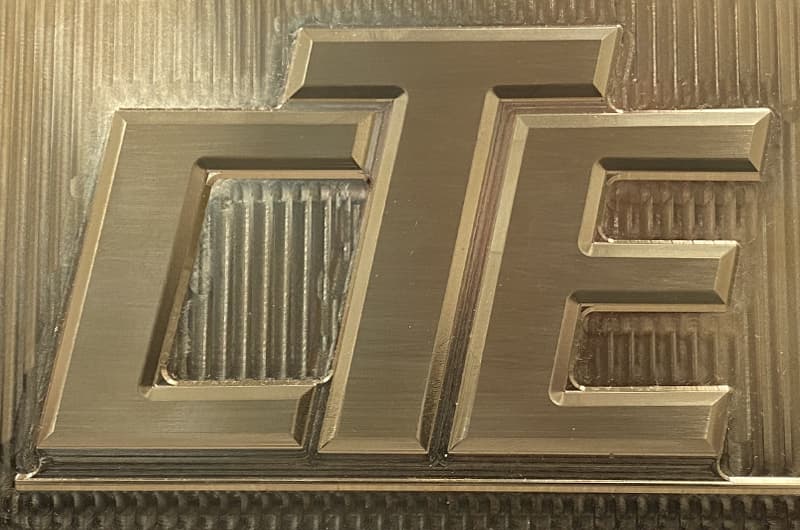
An emboss or foil die is cut from your artwork, so the artwork decides the tool. Send clean vector art at final size, say what should be raised and how far, name the substrate, and decide early whether the emboss has to register to print. Raster art and unstated depth are the two things that cause remakes.
Vector, at the size it will be
The die is machined from paths. If the artwork arrives as a raster image it has to be traced first, and the trace is an interpretation of your design rather than your design.
Send it at final size too. Scaling a fine serif up or down changes which details can physically survive in brass at the depth you want.
Depth is a decision, not a default
Depth mapping is the part customers most often leave to the engraver, and it is the part most specific to intent. A single level emboss, a multi level sculpture, and a bevelled edge are three different tools cut from the same outline.
Say what should sit proud, what should stay flat, and where you want the emphasis. If you are unsure, say that: a die maker would rather have the conversation before the cutter touches the block.
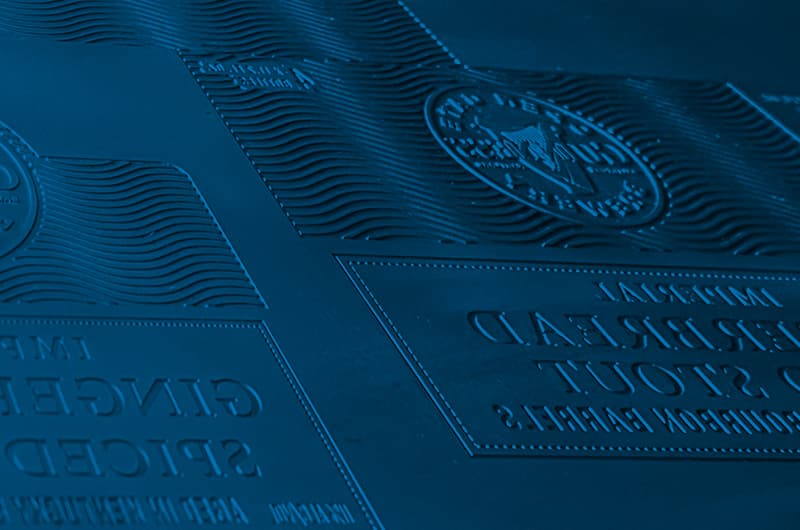
Registration changes the tool
A blind emboss has only itself to line up with. An emboss that has to sit exactly on a printed element has to register to the press sheet, which affects the die, the counter, and the makeready.
This is the single most common late change, and it is expensive late and cheap early.
The substrate sets the ceiling
How far you can raise a surface depends on what the surface is. A soft uncoated stock takes depth readily. A dense coated board resists, and pushed too far it cracks or shows through on the reverse.
Name the stock and, if the job is tight, send some. Testing on the actual substrate settles arguments that no amount of specification can.
Common questions
- What file format is needed for an embossing die?
Vector artwork at final size, as PDF, AI, or EPS. Raster images have to be traced first, which adds time and introduces interpretation of your design.
- What is the difference between blind embossing and registered embossing?
Blind embossing raises the substrate with no printed element beneath it, so it only has to align with itself. Registered embossing has to land exactly on printed artwork, which affects the die, the counter, and the press makeready.
- How deep can an emboss be?
The substrate sets the limit more than the die does. Soft uncoated stocks take depth readily; dense coated boards resist and can crack or show through on the reverse if pushed too far.
Keep reading
Specification
How to Specify a Steel Rule Die
The five things a die maker needs from you to quote and cut a steel rule die: substrate, press, rule height, run length, and the existing tool.
6 min read
Press setup
What a Steel Counter Actually Does
A counter is not packing. It is the matched surface that decides whether a crease folds cleanly, and it wears on its own schedule.
4 min read