

Why Cutting Dies Fail Early
5 min read

Most cutting dies that fail early were not built badly. They were set up, run, or stored badly. The four most common causes are wrong ejection rubber, nicking that was never revisited, makeready that over-packs the press, and storing tools flat under weight.
Ejection rubber is a wear part, not a fitting
Rubber does one job: it pushes the board off the rule after the cut. Too soft and the blank hangs up. Too hard and every stroke drives the rule into resistance it was never meant to take, and the edge rounds off long before the steel should be tired.
Rubber also ages. It compresses, hardens, and stops recovering. A die that cut cleanly last year and drags this year is often a rubber problem being diagnosed as a steel problem.

Nicking is set once and forgotten
Nicks hold the blank in the sheet so it travels. They are specified for a board, and when the board changes the nicking usually does not. Run a lighter stock on nicking cut for a heavier one and the blanks tear; run heavier stock on light nicking and they drop early and jam.
If you have changed substrate since the tool was built, tell the die maker. Re-nicking an existing die is a small job compared with the scrap from getting it wrong.
Makeready hides the real problem
When a cut goes soft, the quickest fix on the floor is more packing. It works, briefly. It also raises the impact on every point of rule that was cutting fine, and it accelerates the wear that made the cut soft in the first place.
A die that needs steadily more makeready is telling you something: the rule is dulling, the counter is worn, or the press is out. Chasing it with packing treats the symptom and shortens the tool.
Storage costs more tools than production
Dies stored flat, stacked, and weighted go out of flat. Board absorbs moisture. Rule takes a set. The tool that comes back off the rack six months later is not the tool that went on it.
Store dies vertically, off the floor, somewhere with stable humidity. It is the cheapest thing on this list and the one most often skipped.
Common questions
- How long should a steel rule die last?
It depends on substrate, run length, and setup rather than on a fixed number of impressions. An abrasive recycled board wears rule far faster than a coated virgin stock at the same volume. Well-stored tools on correct makeready commonly outlast their expected life.
- Why is my die cutting cleanly on one side of the sheet and not the other?
That is usually press or makeready rather than the die: impression is uneven across the platen. Check the counter and the packing before assuming the rule has worn, especially if the soft area is consistent rather than moving.
- Can a worn cutting die be repaired?
Often, yes. Re-ruling a board, replacing rubber, and re-nicking are all routine. Whether it is worth doing depends on the condition of the board and how much life the job has left.
Keep reading
Specification
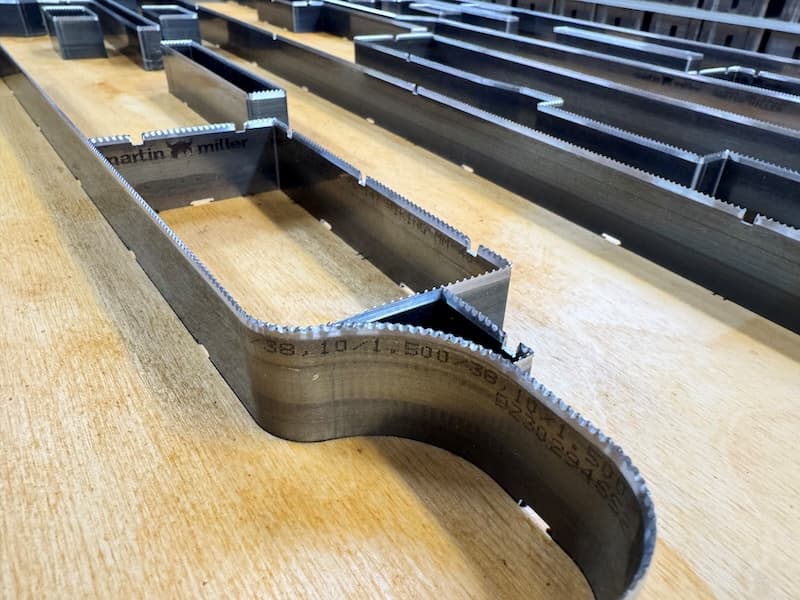
How to Specify a Steel Rule Die
The five things a die maker needs from you to quote and cut a steel rule die: substrate, press, rule height, run length, and the existing tool.
6 min read
Press setup
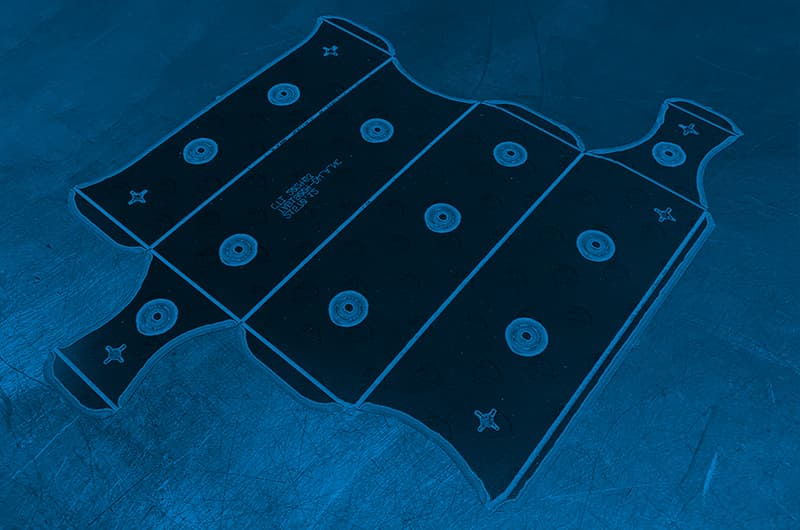
What a Steel Counter Actually Does
A counter is not packing. It is the matched surface that decides whether a crease folds cleanly, and it wears on its own schedule.
4 min read